
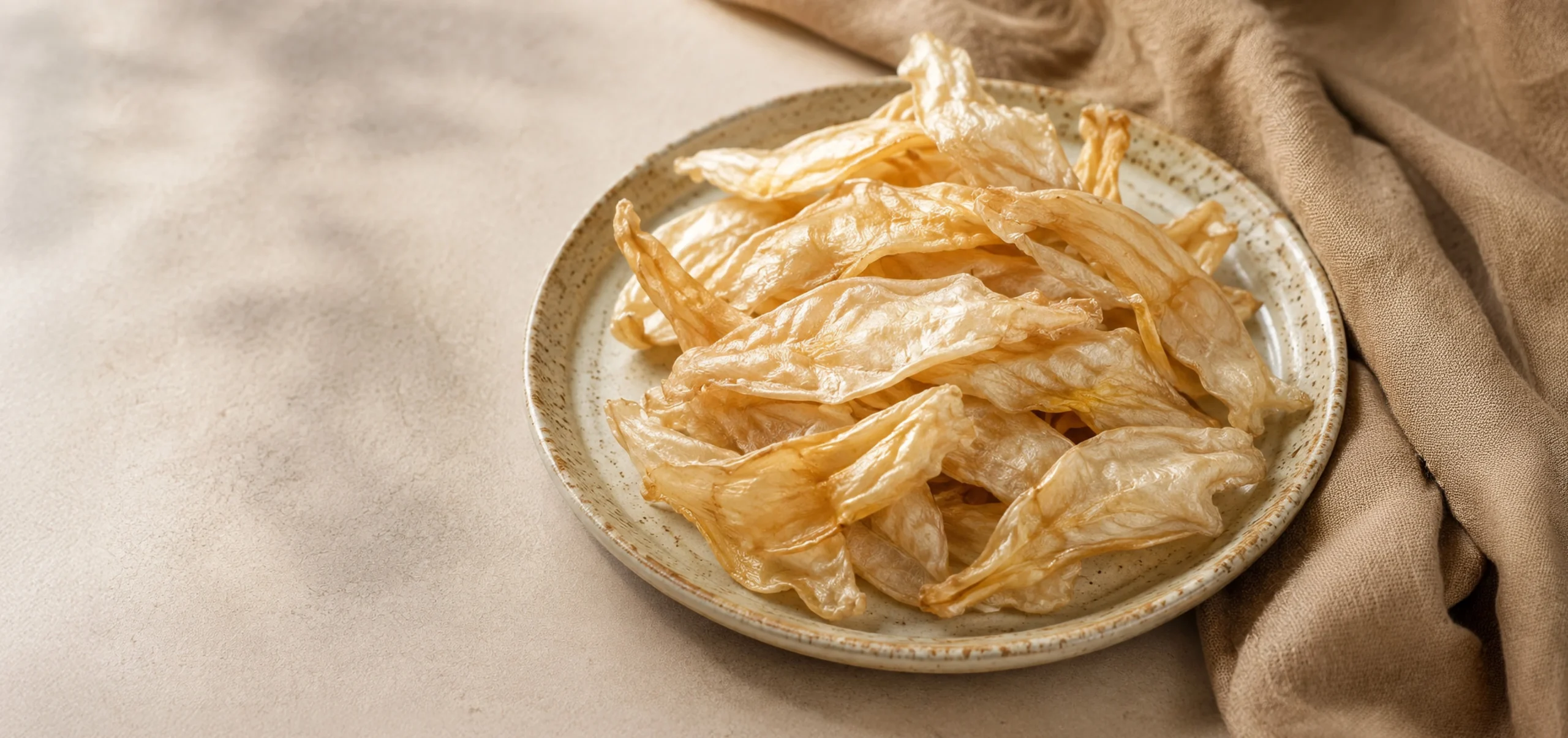
When we talk about the value of a fish, the conversation usually begins and ends with the fillet. But a fish contains much more than what reaches the plate, and as the global food and ingredient industries look more closely at circular production, parts that were once considered by-products are gaining attention as valuable raw materials.
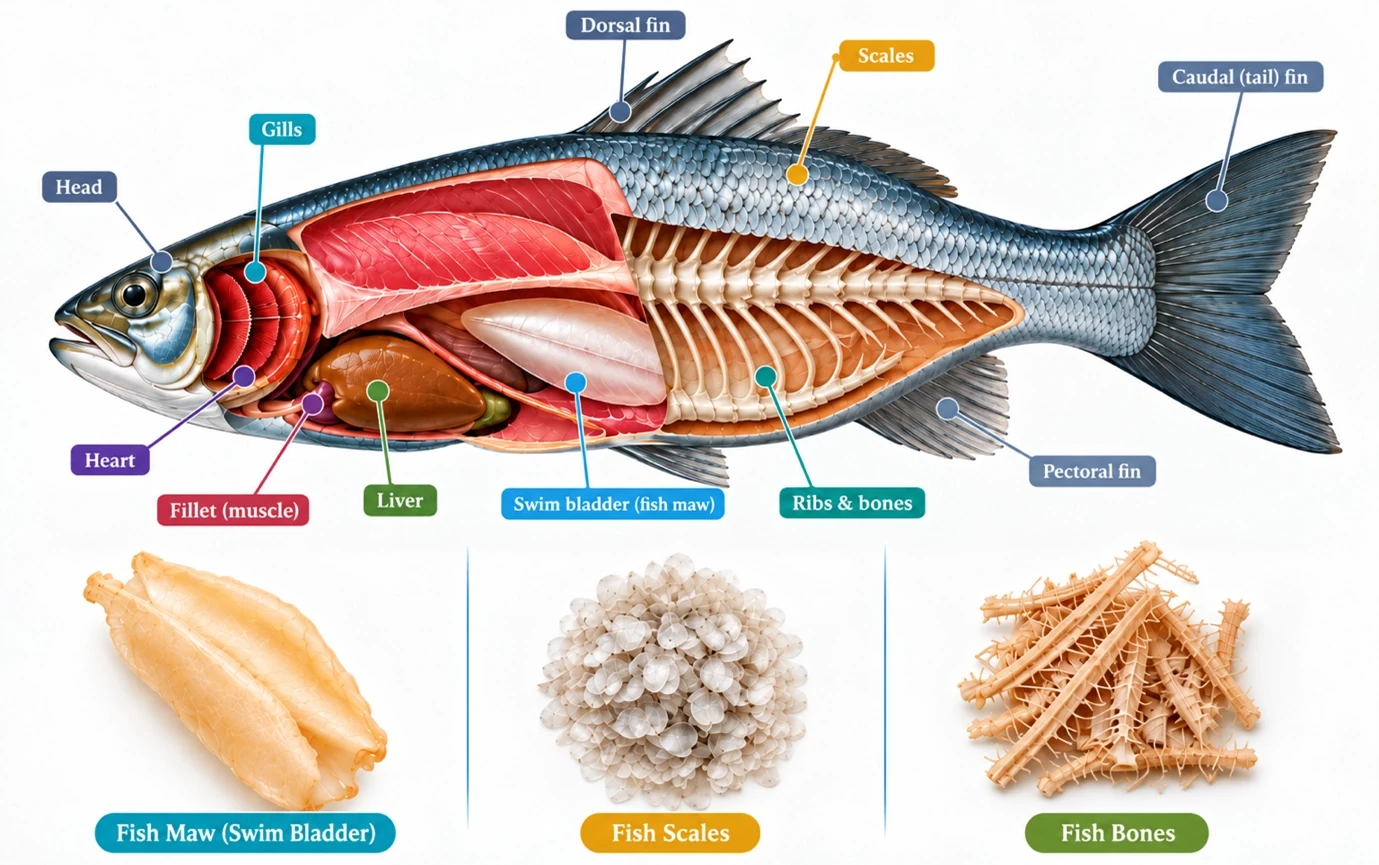
Fish maw, scales and bones are three good examples. Each has a different composition, a different history of use and different possibilities for further processing, but they share one important characteristic: they contain materials that can potentially be recovered and used in other industries.
For seafood producers, this creates a bigger question than simply how to reduce waste. It asks how much more value can be created from the same responsibly produced fish.
Barramundi Fish Maw
Barramundi fish maw is the swim bladder of the Barramundi, an internal organ that helps the fish control its buoyancy in the water. It has been valued for generations, particularly in Asian food cultures, where fish maw is traditionally considered a premium ingredient and is used in soups, broths and other dishes.
To make Barramundi fish maw suitable for consumption, it is carefully cleaned, prepared and dried. Dried fish maw is typically rehydrated before cooking, where it develops a soft, gelatinous texture that makes it particularly valued in traditional cuisine.
For Round Island Barramundi by Oceanpick, the fish maw offers potential value beyond the fillet. It can be developed as a premium seafood ingredient while also providing a marine-derived raw material for companies exploring functional ingredients and other specialised applications.
Barramundi fish maw is naturally protein-rich and has attracted scientific interest because of its composition and structure. Its potential can therefore extend across several areas, including:
- Premium food and traditional seafood products
- Functional and nutritional ingredients
- Marine-derived ingredient development
- Collagen and gelatin-related applications
- Specialised food and nutraceutical products
This makes Barramundi fish maw an interesting raw material for companies looking to develop higher-value products from marine resources.
Barramundi Fish Scales
Forming the protective outer covering of the fish, scales are helping to protect its body while it is in the water. During seafood processing, the scales are separated from the fish, but with suitable cleaning and processing, they can become a useful raw material rather than simply being discarded.
For food or ingredient applications, Barramundi fish scales can be thoroughly cleaned, dried and further processed depending on the intended end use. They can be milled, extracted or processed into different forms, allowing companies to recover specific protein or mineral components.
Round Island Barramundi fish scales contain both organic and mineral components, including collagen and hydroxyapatite. Research has explored fish scales as a source of collagen, gelatin and hydroxyapatite, with potential applications across food ingredients, nutritional products, biomaterials and other specialised industries.
Their potential can therefore extend well beyond the seafood industry. Depending on the processing technology, Barramundi fish scales can become a source material for:
- Gelatin and protein-based ingredients
- Nutritional and functional food applications
- Calcium and mineral-based products
- Biomaterials
- Research and specialised industrial applications
For Oceanpick, this creates an opportunity to connect Round Island Barramundi fish scales with companies that have the technology and applications to turn them into useful, higher-value products.
Barramundi Fish Bones
Once Round Island Barramundi is processed, the bones remain as part of the processing stream, but they retain a valuable combination of proteins and minerals.
With suitable processing, Barramundi fish bones can be cleaned, dried and milled into usable materials, while more advanced processes can separate particular protein and mineral components. This opens up different possibilities depending on the intended application and the technology available.
Barramundi bones contain collagen alongside naturally occurring calcium and phosphorus, making them an interesting source of both protein and mineral components. Research has investigated the recovery of these materials for applications ranging from food and nutritional ingredients to biomaterials.
Potential applications include:
- Calcium- and mineral-rich food ingredients
- Nutritional products
- Protein and functional ingredients
- Biomaterials
- Specialised mineral and marine-derived products
The value of Barramundi fish bones ultimately depends on how effectively their different components can be recovered and matched with a suitable application. For companies with the right processing technology, Round Island Barramundi fish bones can therefore become another valuable raw-material stream rather than simply a leftover from fillet production.
Collagen: A Valuable Marine Resource
Collagen is the main structural protein found in the human body. It helps provide strength, structure and support to tissues such as skin, bones, cartilage, tendons and connective tissue.
Because of these properties, collagen is used across a wide range of industries, including:
- Food and nutritional products
- Nutraceuticals and supplements
- Cosmetics and skincare
- Pharmaceutical applications
- Biomaterials and medical applications
The Growing Interest in Fish Collagen
Collagen is not only sourced from land animals. Fish collagen, also known as marine collagen, has become an area of growing scientific and commercial interest, with researchers studying collagen obtained from different fish tissues and species.
Marine collagen is particularly interesting because it provides another source of collagen while making use of materials generated through seafood processing. Research has identified tissues such as fish skin, scales, bones and swim bladders as potential collagen sources, while studies continue to explore their properties and suitable extraction methods.
The characteristics of fish collagen can vary depending on the species and the tissue from which it is extracted. This makes the choice of raw material an important part of developing a consistent and commercially useful collagen product.
Where Round Island Barramundi Comes In
For Round Island Barramundi by Oceanpick, two parts of the fish are particularly relevant when looking at the potential of marine collagen: Fish Maw & Scales.
Both are naturally occurring tissues containing collagen and can therefore be considered as potential raw materials for further investigation and processing.
Turning this potential into a commercial product, however, requires the right collection, handling, extraction, purification and quality-control processes. This is where partnerships between seafood producers and specialist companies can become important.
For Oceanpick, the opportunity is to connect Round Island Barramundi with companies that have the technology and expertise to explore these materials further — creating possibilities for new products and additional value from the whole fish.
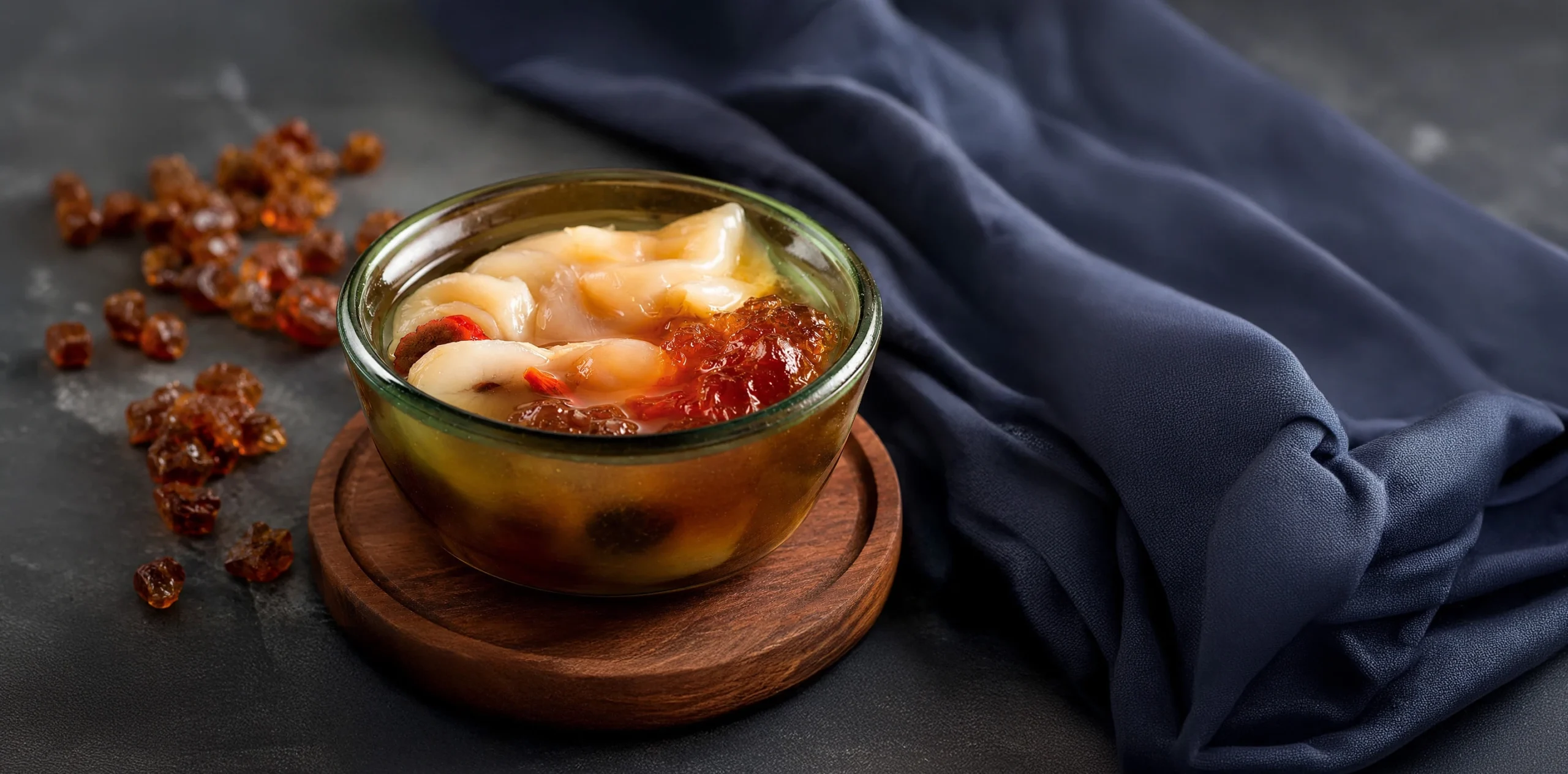
Upcycling Round Island Barramundi
At Oceanpick, we believe that responsible seafood production should look beyond the value of the fillet. Round Island Barramundi is a complete marine resource, and the fish maw, scales, bones and other processing materials can offer opportunities for further use when the right technology and applications are available.
This is where upcycling becomes an important part of the conversation.
Rather than treating suitable fish processing materials simply as waste, upcycling looks at how they can be recovered and transformed into something with new value. Across the seafood industry, research and commercial innovation are exploring opportunities to turn fish by-products into ingredients, collagen, biomaterials, nutritional products, feed and other specialised mate
A Partnership Opportunity for Global Upcycling Companies
Oceanpick brings together an established source of ocean-raised Round Island Barramundi, a dedicated processing operation and access to international seafood markets. Our Barramundi is raised in the open waters of Trincomalee, Sri Lanka, and is already supplied to food service, importer, distributor, wholesale and retail customers internationally.
For an upcycling company, this creates an opportunity to work directly with a seafood producer rather than simply sourcing mixed or unidentified fish-processing materials.
We are interested in conversations around:
- Raw-material supply
Exploring suitable Round Island Barramundi processing streams for specific applications. - Technology partnerships
Working with companies developing extraction, separation, processing or conversion technologies. - Ingredient development
Investigating the potential to turn fish-derived materials into new ingredients or specialised products. - Commercial applications
Connecting marine-derived materials with companies that already have established markets and applications.
The next step in seafood sustainability is not only about producing more responsibly. It is also about asking how much more value we can create from the resources we already produce. At Oceanpick, we want to explore that question with companies that have the technology, knowledge and ambition to take marine by-products further.
We want to hear it. If you are an upcycling company, collagen producer, ingredient manufacturer or technology provider, let’s explore how Barramundi can become part of your next product or application.
Partner with Oceanpick to explore the upcycling potential of Round Island Barramundi. Drop us a message.